Conclusion: Bitcoin's Unique Position
After studying thousands of cryptocurrencies, the conclusion is remarkably simple: Bitcoin occupies a unique position that no other cryptocurrency can replicate. Not because it has the best features, but because it has the strongest foundation.
Why Bitcoin Stands Alone:
- •No founder: Satoshi Nakamoto disappeared. No CEO, no company, no central point of failure.
- •Fair launch: No pre-mine, no ICO, no insider allocation. Pure meritocracy.
- •Fixed supply: 21 million, hardcoded and immutable. The only credible scarcity in crypto.
- •Proven security: 15+ years, zero successful attacks on consensus. The Lindy effect in action.
- •True decentralization: No foundation controls development. Changes require rough consensus.
- •Largest network: 100x more hash rate than any other PoW chain. Deepest liquidity, most users.
- •Institutional adoption: ETFs, corporate treasuries, nation-states. No altcoin comes close.
- •Regulatory clarity: Bitcoin is not a security. Most altcoins face legal uncertainty.
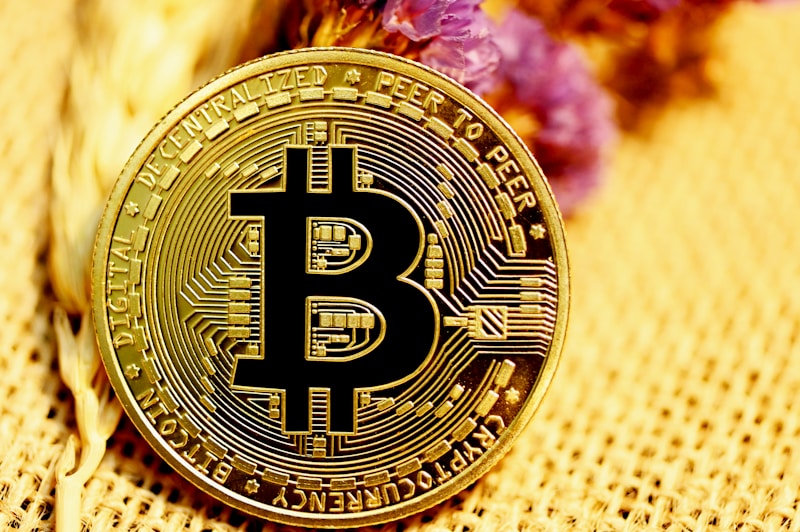
Altcoins: Experiments, Not Alternatives:
- •Most altcoins are experiments exploring different trade-offs (speed vs decentralization, features vs security).
- •Some have interesting tech (Ethereum's smart contracts, Monero's privacy), but come with significant compromises.
- •The vast majority are: pump-and-dump schemes, founder get-rich-quick projects, or solutions in search of problems.
- •History: Thousands of altcoins have come and gone. Bitcoin remains.
The "Bitcoin Killer" Myth:
Every cycle, new projects claim to be "Bitcoin killers" with superior technology. None have succeeded. Why?
- •Network effects: Bitcoin's lead compounds. More users → more security → more trust → more users.
- •Decentralization trade-offs: Faster/cheaper chains achieve this via centralization (fewer validators, higher hardware requirements).
- •Security takes time: Bitcoin has survived 15+ years of attacks. New chains are untested.
- •Money is conservative: People trust what has worked for decades, not the latest innovation.
- •Bitcoin adapts: Lightning, Taproot, sidechains—Bitcoin improves in layers without breaking the base.
Key Investment Considerations:
If you're thinking about Bitcoin vs altcoins:
Bitcoin
- •Pros: Proven security, liquidity, institutional support, regulatory clarity, simplest narrative (digital gold).
- •Cons: Slower base-layer innovation, "boring" compared to flashy altcoin features.
- •Risk profile: Lower risk than altcoins. Most conservative crypto investment.
- •Time horizon: Long term. Bitcoin is for saving, not speculating.
Altcoins
- •Pros: Higher potential for 10-100x returns (but also 90%+ losses). Experimentation and innovation.
- •Cons: Higher risk, most fail, regulatory uncertainty, founder control, smaller networks, less liquidity.
- •Risk profile: High risk. Suitable only for speculation with money you can lose.
- •Time horizon: Short to medium. Most altcoins don't survive cycles.

Portfolio Considerations (Not Financial Advice):
- •Core position: Bitcoin—the foundation. Proven, liquid, lower risk.
- •Satellite positions: Small allocations to high-conviction altcoins (if you understand the risks and tech).
- •Rule of thumb: Many investors hold 80-90% Bitcoin, 10-20% altcoins (if any).
- •Avoid: Random altcoins, meme coins, shitcoins. Most go to zero.
- •Self-custody: Hold your Bitcoin in a hardware wallet. For altcoins, weigh convenience vs security.
Final Thoughts:
- •Bitcoin is money: Designed to be a store of value and medium of exchange. Simple, secure, decentralized.
- •Altcoins are tech projects: Exploring different use cases (smart contracts, privacy, speed). Interesting, but most are not money.
- •Don't get distracted: New projects with big promises appear every cycle. Few deliver. Bitcoin has already delivered for 15 years.
- •Zoom out: Bitcoin's slow, conservative approach is a feature, not a bug. It's building a foundation for centuries, not chasing quarterly hype cycles.
- •Stay humble: No one knows the future. But history favors simplicity, decentralization, and proven security—Bitcoin's core strengths.
Questions to Revisit:
Before investing in any cryptocurrency (Bitcoin or altcoin), ask:
1. What problem does this solve? 2. Why does it need a blockchain? 3. How decentralized is it really? 4. Who controls development and supply? 5. What are the security trade-offs? 6. Does it have real adoption, or just speculation? 7. Can I verify the rules myself (run a node)? 8. How does it compare to Bitcoin on first principles?

Conclusion:
Bitcoin is not just another cryptocurrency. It's the only one with:
- •A fair, decentralized origin
- •A credible, unchangeable monetary policy
- •Proven security across 15+ years
- •Massive network effects and institutional adoption
- •No central point of failure or control
Altcoins serve as experiments and speculation. Some have merit in specific niches. But for sound money, digital gold, and long-term value storage, Bitcoin stands alone.
Focus on Bitcoin first. Understand it deeply. Everything else is noise.
Bitcoin's unique position rests on three pillars no competitor can replicate: true decentralization, 16 years of proven security, and a monetary policy that cannot be changed. Everything else is a feature war.
Test Your Knowledge
5 questions · Passing score: 80%
Enjoying these lessons?
Get a free Bitcoin lesson in your inbox every week. Join thousands of learners.
Free forever. No spam. Unsubscribe anytime.